
This content was aggregated from local dealer and data and insights provided by the USA Today Network Automotive Insights team using Google Gemini and the Vehicles for Sale Near New York marketplace writing team.
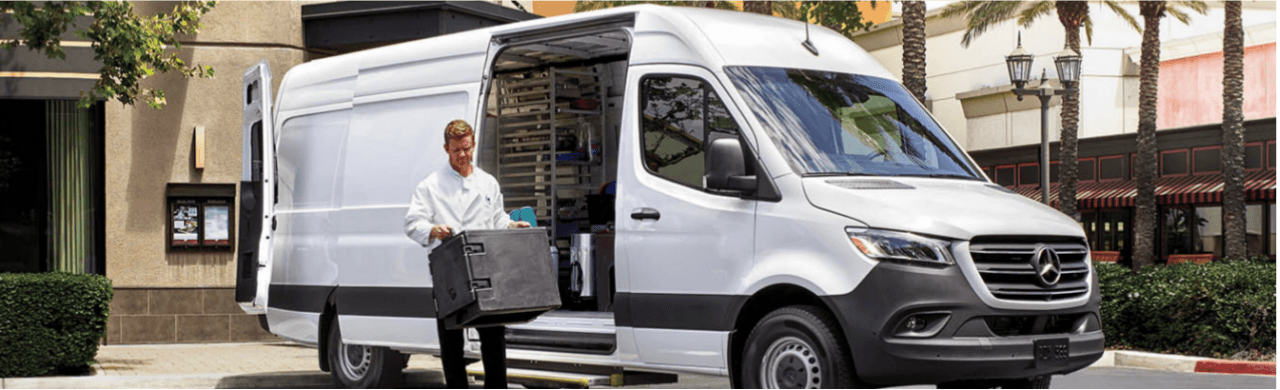
For contractors, the right work vehicle is more than transportation. It is part of the jobsite itself, carrying tools, materials, equipment, and supplies between customers, offices, warehouses, and projects. The 2026 Mercedes-Benz Sprinter is worth considering for businesses that need a commercial van capable of supporting demanding daily routines while providing a professional platform for different types of work.
For contractors operating in New York and the Greater New York Metro Area, vehicle selection also has to account for traffic, parking, regional travel, changing weather, and the need to keep equipment organized. The Sprinter may appeal to businesses that want to evaluate a purpose-built commercial van rather than adapting a passenger vehicle to work duties.
A cargo van needs to work around the contractor's business rather than the other way around. Electricians, plumbers, remodelers, installers, maintenance companies, and general contractors can have very different equipment requirements, so the most important question is whether the configuration supports the work.
Before selecting a Sprinter, consider:
Cargo requirements: Determine how much equipment, material, and supplies your crew normally carries.
Daily routes: Think about the mix of local service calls, job sites, highways, and warehouse trips.
Organization: Consider how shelving, storage systems, bins, and other work-oriented solutions could fit the vehicle.
Crew needs: Decide whether the van primarily carries equipment or also needs to accommodate workers.
Business use: Evaluate whether the vehicle supports the type of contracting work your company performs most often.
This approach helps prevent choosing a van based solely on its appearance or reputation. The useful configuration is the one that matches the actual workflow.
Commercial vehicles are particularly sensitive to configuration. A contractor carrying compact tools may have very different requirements from a company transporting bulky materials or specialized equipment.
Shoppers should compare the details of individual Sprinter configurations, including:
Cargo layout and usable space.
Seating requirements for employees or crew members.
Access to the cargo area.
Equipment and convenience features.
Drivetrain and other configuration characteristics.
Upfit possibilities for the intended trade.
The goal is to create a vehicle that reduces unnecessary trips and makes equipment easier to access. That can be especially valuable when a contractor spends much of the workday moving between multiple locations.
A business should also think about future needs. If the company expects its services or equipment requirements to change, choosing a configuration with appropriate flexibility may be more useful than optimizing only for today's workload.
New York presents a combination of urban and suburban driving conditions. A commercial van may encounter dense traffic, constrained parking areas, highways, construction zones, and frequent stops in the same workweek.
That makes operational practicality important.
Contractors should consider:
Urban maneuvering: Think about how the van will be used on tighter streets and around active job sites.
Parking: Determine where the vehicle will normally be stored and parked during service calls.
Traffic: Frequent congestion can make driver comfort and an organized cabin more important.
Weather: Rain, winter conditions, and changing road surfaces should be considered when selecting a commercial vehicle.
Regional travel: A contractor serving customers throughout the Greater New York Metro Area may spend substantial time on highways between projects.
The Sprinter's value should therefore be evaluated in the context of the entire workday, not just the time spent at a jobsite.
One advantage of starting with a dedicated cargo van is the opportunity to organize the vehicle around the business. The exact approach depends on the trade, but thoughtful organization can make frequently used equipment easier to locate.
For example, a contractor may want to prioritize:
Shelving for smaller tools and supplies.
Dedicated storage for frequently used equipment.
Space for larger materials.
Secure areas for valuable tools.
An arrangement that keeps commonly needed items accessible.
These are business-specific considerations rather than standard vehicle specifications. Contractors should evaluate the individual Sprinter and determine whether its configuration can accommodate the type of organization or upfit their company requires.
The supplied market snapshot dated August 25, 2026, classifies the market as a Balanced Market with Moderate demand. For a business buyer, that provides useful context but does not establish the price, availability, or negotiation outcome for any individual Sprinter.
A balanced market generally indicates that the supplied classification does not show an overwhelming advantage for either buyers or sellers. Moderate demand suggests that businesses should still compare available vehicles carefully rather than assuming every commercial van offers the same value.
The snapshot can be summarized as:
Market direction: Balanced Market.
Demand level: Moderate.
Data date: August 25, 2026.
Practical implication: Compare configuration, equipment, condition, and suitability for the intended business use.
Market conditions can change, and individual vehicles may differ substantially from the broader market picture. For a contractor, operational fit should remain the primary consideration.
The Sprinter may be worth considering for businesses that need a dedicated commercial van and want to align the vehicle with their particular workflow. It could be a strong candidate for contractors who regularly carry tools, equipment, supplies, or materials between multiple locations.
Before purchasing, identify your priorities around:
Cargo and equipment requirements.
Employee or passenger needs.
Typical driving routes.
Storage and organization.
Weather and road conditions.
Future business requirements.
A van that fits the company's workflow can be more useful than one selected simply because it offers a particular feature or configuration.
Contractors shopping in the Greater New York Metro Area should compare individual vehicles carefully. Equipment, configuration, condition, pricing, and availability can vary, so review the details of each listing before making a business purchase.
For an additional contractor-focused perspective, read Why general contractors are upgrading to the Mercedes-Benz Sprinter cargo van.
The 2026 Mercedes-Benz Sprinter may be a practical platform for businesses that need cargo flexibility and a vehicle designed around commercial work. The best choice ultimately depends on the contractor's trade, routes, equipment, crew requirements, and long-term business plans.
The Sprinter may be a good fit for contractors who need a dedicated commercial van for tools, equipment, supplies, or materials. The appropriate configuration depends on the company's specific workflow.
Cargo requirements, seating, configuration, equipment, storage organization, typical routes, and potential upfit needs are all worth comparing before purchase.
It may suit businesses operating across urban, suburban, and highway environments. Contractors should consider parking, traffic, weather, and the locations they routinely service.
Contractors can evaluate whether a particular configuration can accommodate the storage and organization solutions their trade requires. The ideal setup will vary by business.
Not necessarily. Moderate demand is the supplied market classification and does not establish a specific inventory level. Individual availability can change over time.
Written for https://vehiclesforsalenearnewyork.com
By the USA TODAY Network Automotive Insights Team, in collaboration with Mercedes-Benz of Edison and the Vehicles For Sale Near New York - USA Today.
Disclaimer: The content provided in this article is intended for informational purposes only. Vehicle images may not depict the exact model, trim, features, packages, accessories, or specifications described. Vehicle pricing, availability, features, and specifications are subject to change without notice. Please consult the dealership directly for complete and accurate vehicle information.